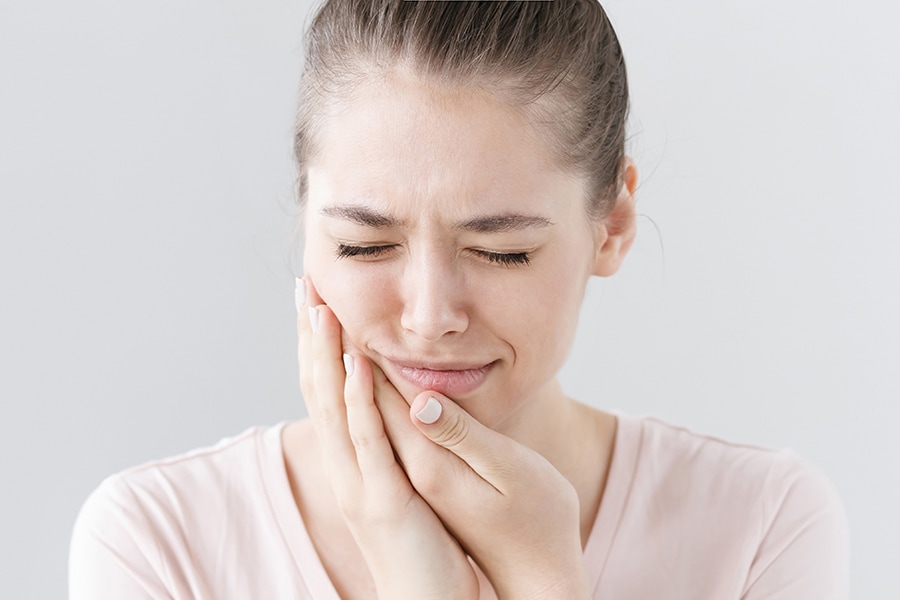
Why Does My Jaw Hurt When I Chew?
Enjoying your favourite meals should be a pleasurable experience. However, if chewing causes persistent jaw pain, clicking sounds, or difficulty in opening or closing your mouth, you might be experiencing a temporomandibular joint (TMJ) disorder. The good news is that TMJ disorder is generally manageable, and effective treatments are available.
Understanding TMJ Disorder
The term “TMJ disorder” can refer to any issue affecting the temporomandibular joint, which connects your jawbone to your skull and facilitates essential movements like chewing and speaking. When the temporomandibular joint doesn’t function properly, it can lead to TMJ disorder, resulting in discomfort and complications during jaw movements.
TMJ disorder can be caused by various phenomena, such as:
- Bruxism (teeth grinding or clenching): Often linked to stress, this habit can strain the jaw muscles.
- Arthritis: Inflammation from conditions like osteoarthritis or rheumatoid arthritis can affect the TMJ.
- Jaw misalignment: Improper alignment can cause uneven pressure on the joint.
- Injury: Trauma to the jaw or head can damage the TMJ.
- Overuse: Frequent gum chewing or nail biting can stress the joint.
How Is TMJ Disorder Diagnosed?
Our experienced TMJ specialists at The Paddington Dental Surgery closely evaluate each case of TMJ disorder to make a diagnosis and determine what may be contributing to the problem. In most cases, the process of diagnosing TMJ disorder will involve:
- A physical examination assessing jaw movement, listening for joint sounds, and checking for tenderness.
- A bite analysis evaluating how your teeth come together to identify misalignments).
- Imaging utilising X-ray or other techniques to view the joint’s structure.
How Is TMJ Disorder Treated?
While there are a variety of treatments you can perform at home, such as eating softer foods, performing facial massage, or applying heat or ice to your jaw, these typically only reduce symptoms temporarily and do not treat your TMJ disorder long-term.
- Custom oral appliances (i.e. a mouthguard) to prevent teeth grinding and alleviate pressure on the joint.
- Physical therapy to strengthen jaw muscles and improve function.
- Medications, such as pain relievers or anti-inflammatories, to reduce discomfort.
- Orthodontic therapies, namely Invisalign®
If you regularly have jaw pain, we encourage you to schedule an appointment with one of our dentists. After assessing your condition, they can customise treatment to help you maximise your TMJ function and achieve lasting relief from your symptoms.
To get a diagnosis for TMJ disorder and learn which treatment method may provide the best possible results for your unique case, please feel free to contact our office.
Editor’s note: The original version of this blog was posted on 25 August 2021